
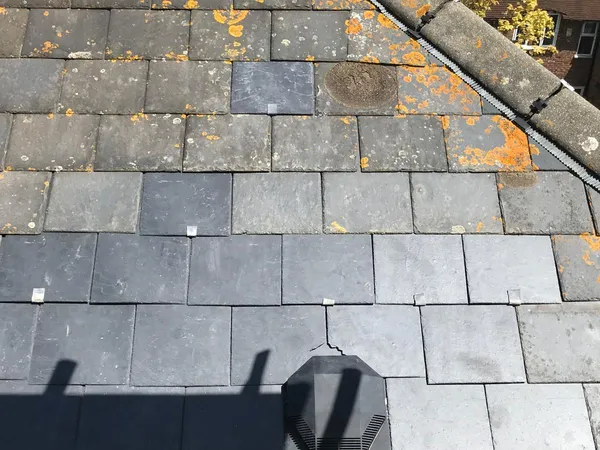

Tiled Roofs in Sussex: New Roofs & Repairs
Clay and concrete tiled roofs stripped, re-laid and repaired across East and West Sussex.
- New tiled roofs with a 25-year guarantee
- Slipped, cracked and missing tiles replaced
- Ridges, hips, verges and valleys rebuilt
- 30+ years' experience
- Free quotes
- £5m public liability insured
- Local Worthing firm
Worthing based, Sussex wide
Tiled roof installation and repairs in Sussex
Royal Roofing Services fits new tiled roofs and repairs existing ones across Sussex. From our base in Worthing we strip tired roofs back to the rafters, lay new membrane, battens and tiles, and finish the ridges, hips, verges and valleys so the whole roof sheds water as one.
Most roofs in the county are tiled, in clay or concrete, and most of the faults we are called to are small ones that were left too long. Call us on 07957 072703 for a free quote, and a free survey if you own the house.
Related services
Other pitched roof work we do
How a tiled roof keeps the water out
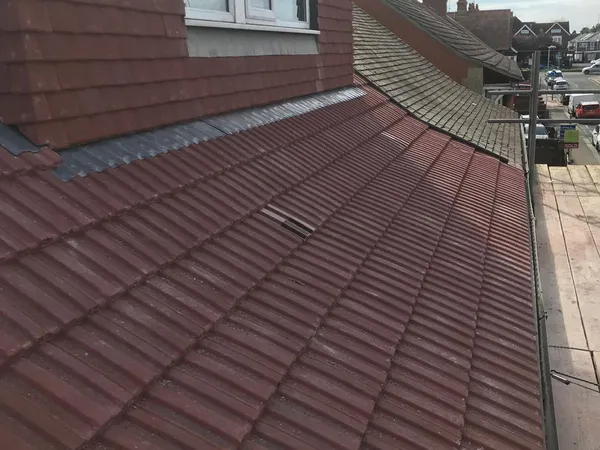
A tiled roof is not waterproof in the way a flat roof is. It works by overlap. Each course of tiles covers the top of the course below, so rain runs down the slope from tile to tile and into the gutter. Under the tiles sits a membrane, which catches wind-driven rain and snow that gets past the laps and carries it down to the eaves.
That is why a tiled roof can look fine from the pavement and still leak. The usual weak points are:
- Slipped or cracked tiles, which open a gap in the overlap.
- Old underlay, which goes brittle and tears, most often at the eaves.
- Ridge and hip mortar, which cracks and lets the tiles rock in the wind.
- Valleys and flashings, where two surfaces meet and water is concentrated.
When we survey a tiled roof we look at all four, from outside and from inside the loft.
Free quotes across Sussex
Need a roofer in Sussex?
Tell us what you can see from the ground and we will take it from there. Quotes are free.
Materials and methods
Clay tiles, concrete tiles and how they are fixed
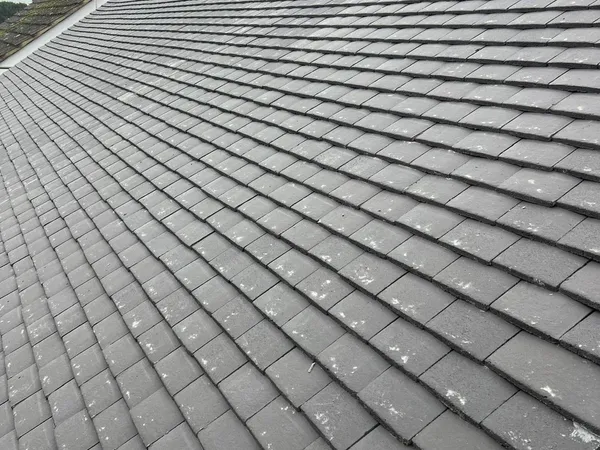
Sussex roofs are tiled in two main ways. Older houses usually carry small plain tiles, traditionally clay, laid so each tile overlaps two courses below. Houses from the 1950s onwards more often have larger concrete interlocking tiles, which lock side to side and need only a single lap.
The two behave differently as they age. Clay plain tiles last very well but the nibs that hook them over the batten can break, and the nails or pegs holding them can give out. Concrete tiles lose their surface over the decades and take up more water, which adds weight and encourages moss.
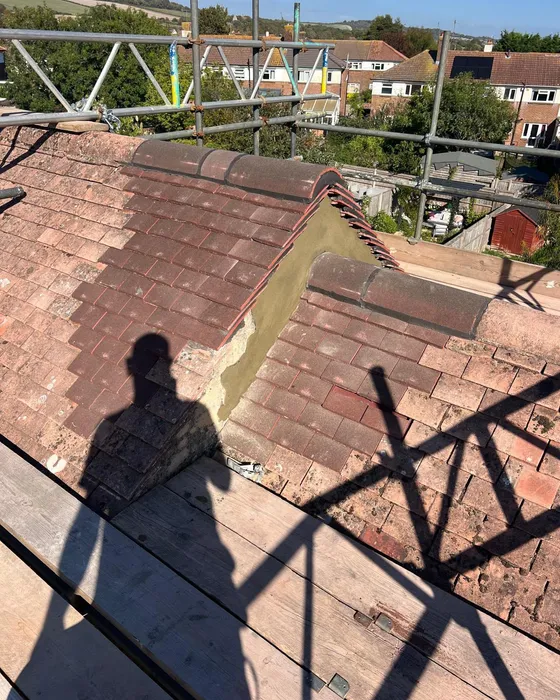
On a new roof we fix tiles to treated battens over a breathable membrane, nailing or clipping them to suit the pitch and how exposed the house is. Ridges and hips are either bedded in mortar with a mechanical fixing, or fitted as a dry ridge system. If you want the new roof to match the neighbours or the rest of a terrace, tell us at the survey and we will price for a matching tile.
Step by step
A tiled re-roof, step by step
Survey
We look at the roof from outside and in the loft, and tell you what it needs.
Scaffold
Access goes up and the ground below is protected.
Strip
The old tiles, battens and underlay come off and the rafters are checked.
Prepare
Any soft timber is replaced, then new membrane and battens go on.
Tile
The new tiles are laid and fixed, with ridges, hips and verges finished.
Seal
Lead is renewed around chimneys, valleys and dormers. See leadwork.
Finish
Gutters are cleared, the site is tidied and the scaffold comes down.
A complete new roof carries our 25-year guarantee.
What to look for
Signs your tiled roof needs attention
Most of these can be seen from the ground or from the loft hatch. You do not need to go on the roof, and we would rather you did not.
Tiles in the gutter or on the ground
A slipped tile leaves the underlay exposed.
Daylight in the loft
Pinpricks of light mean gaps in the tiling above.
Mortar on the path
Pieces under the ridge or verge mean the bedding is breaking up.
A dip in the roofline
Sagging between rafters can mean tired battens or timber.
Damp patches upstairs
Stains on a ceiling or chimney breast after rain.
Heavy moss on concrete tiles
It holds water against the tile and blocks gutters.
Job story
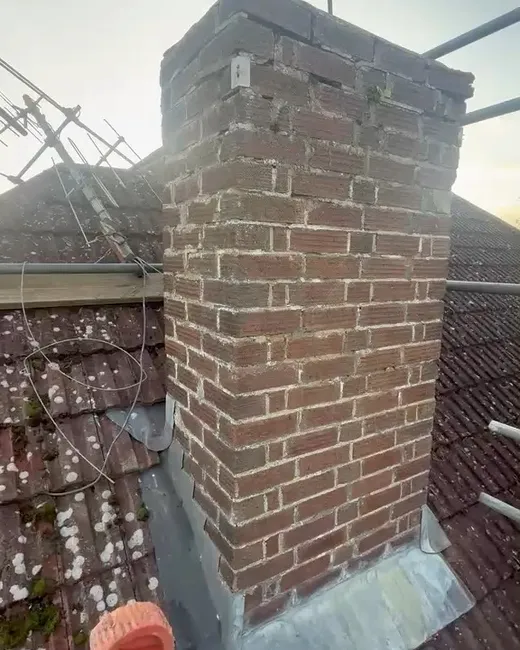
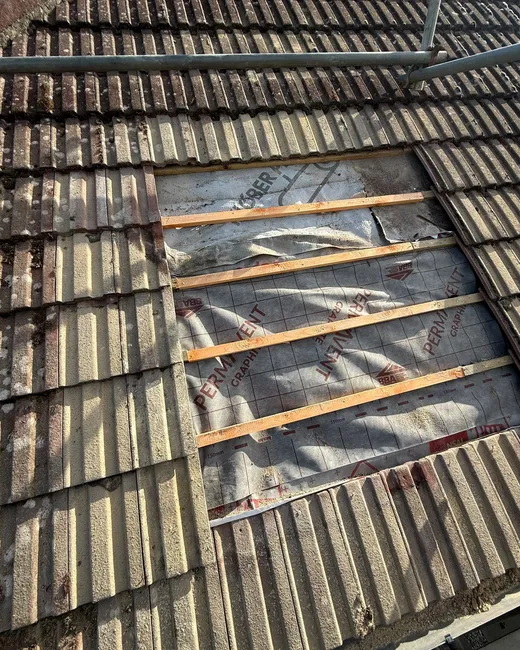
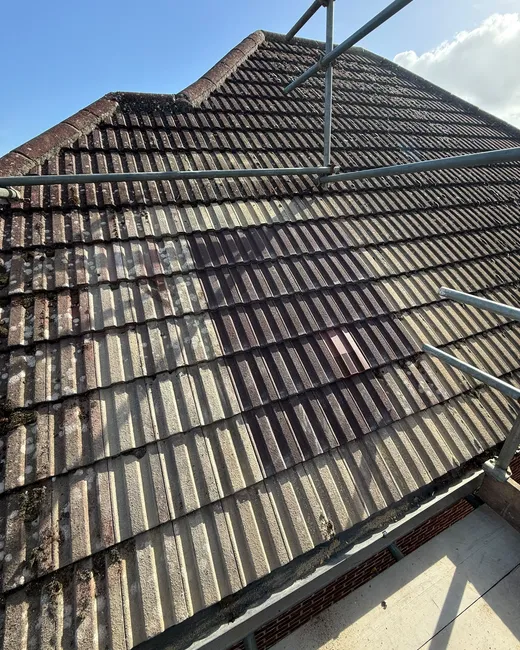
Chimney removed from a tiled roof, and the roof made good
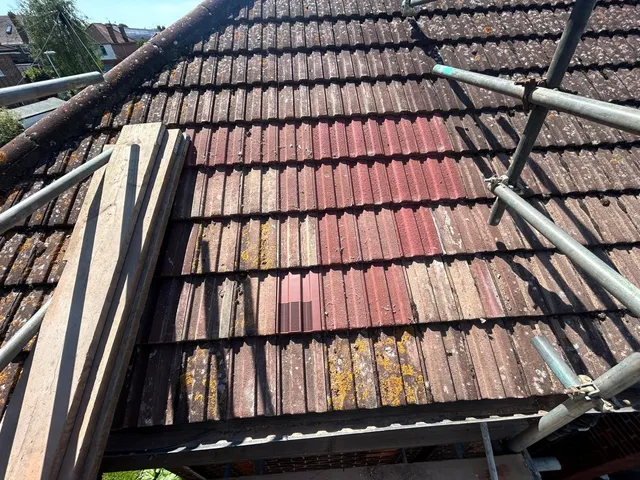
This house had a redundant brick chimney on a concrete tiled roof. Once the stack was taken down below the roofline, the opening was closed with new timber, breathable membrane and battens, then tiled in to match the courses on either side. It is the same sequence we follow on any patch repair: make the structure sound, renew the underlay, then tile so the new work lines up with the old.
Repair or a new tiled roof?
We look at the roof before we quote, and we will tell you plainly which side of the line it falls.
Repair when
- The damage is in one place: a few slipped, cracked or missing tiles.
- A ridge, hip or verge has come loose but the tiles themselves are sound.
- A valley or flashing is leaking and the rest of the roof is dry.
- The underlay and battens are still in good order in the loft.
Replace when
- Tiles are failing all over the roof, not in one area.
- The underlay has perished and is tearing wherever you look.
- Battens are soft or broken, so tiles keep slipping after each repair.
- You have paid for several repairs in a few years and the leaks move around.
Repairs are a sound choice on a sound roof. See roof repairs for how we trace a leak, or complete roof replacement for what a new roof involves.
What affects the price
What changes the price of a tiled roof
We do not publish prices, because two roofs of the same size can need very different work. These are the things that move a quote up or down.
Size and shape
Hips, valleys and dormers take longer than a plain two-sided roof.
Scaffolding
Height, access down the side of the house and anything it has to bridge.
The tile
Plain tiles take more tiles and more labour per square metre than large interlocking ones.
Timber
Rafters or battens found to be soft once the roof is open.
Leadwork
Chimneys, abutments and valleys that need new lead.
Extras
Roof windows, new fascias or insulation added while the roof is off.
Our new roof cost guide explains each of these in more detail.
Done properly
A tiled roof done properly
A new roof should last for decades, so the parts you cannot see matter as much as the tiles. This is what to ask us, or any roofer, before you agree to the work.
- Will the old underlay and battens be replaced, or are new tiles going over old?
- How will the ridge, hips and verges be fixed, and will they rely on mortar alone?
- Who checks the rafters once the roof is stripped, and what happens if timber needs replacing?
- Will the lead at the chimney and valleys be renewed or reused?
- Is the work notified to Building Control where the rules call for it?
- What does the guarantee cover, and is it in writing?
- Is public liability insurance in place? Ours is £5m public liability insurance.
Our work
Recent tiled roof jobs
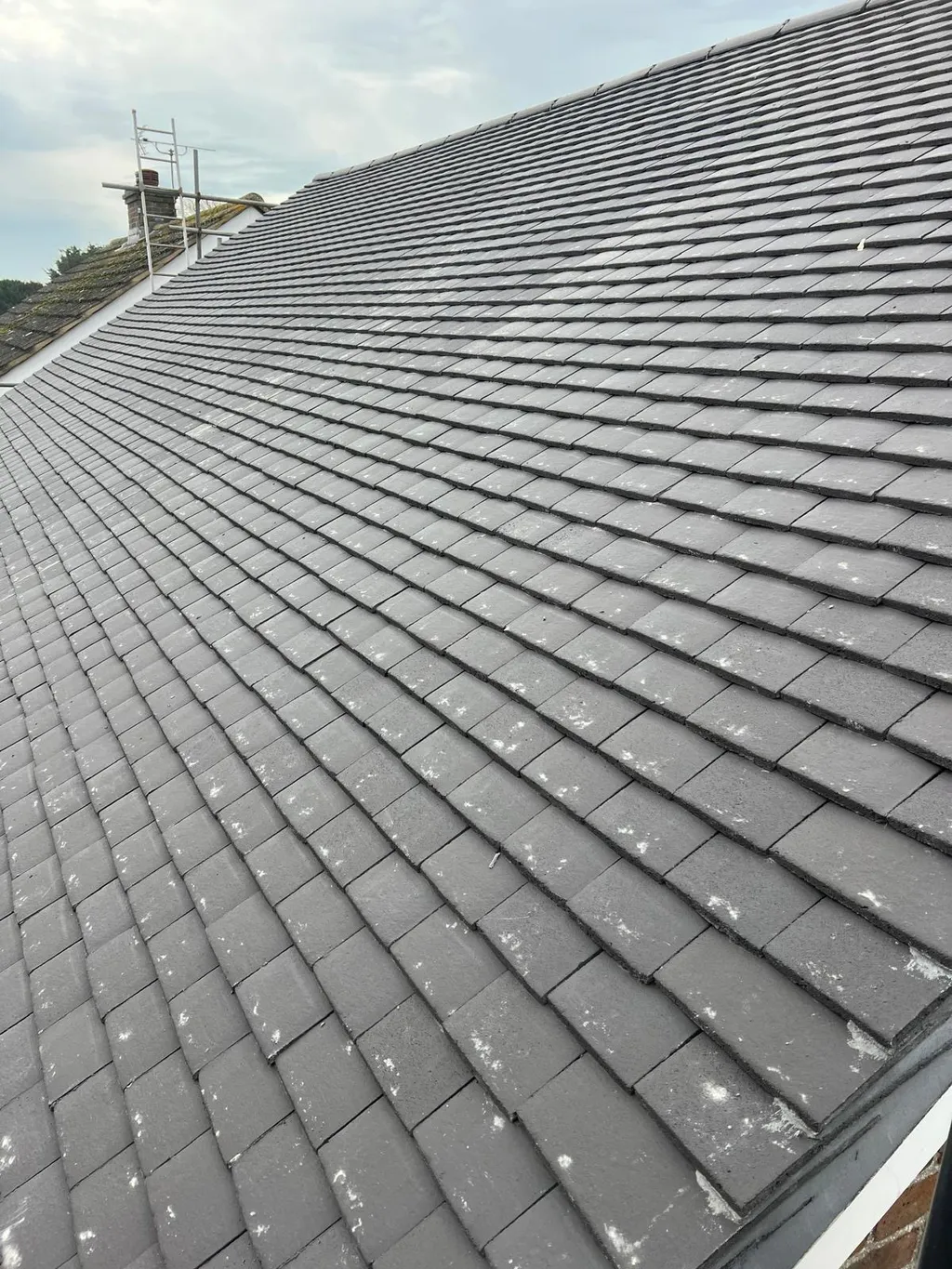
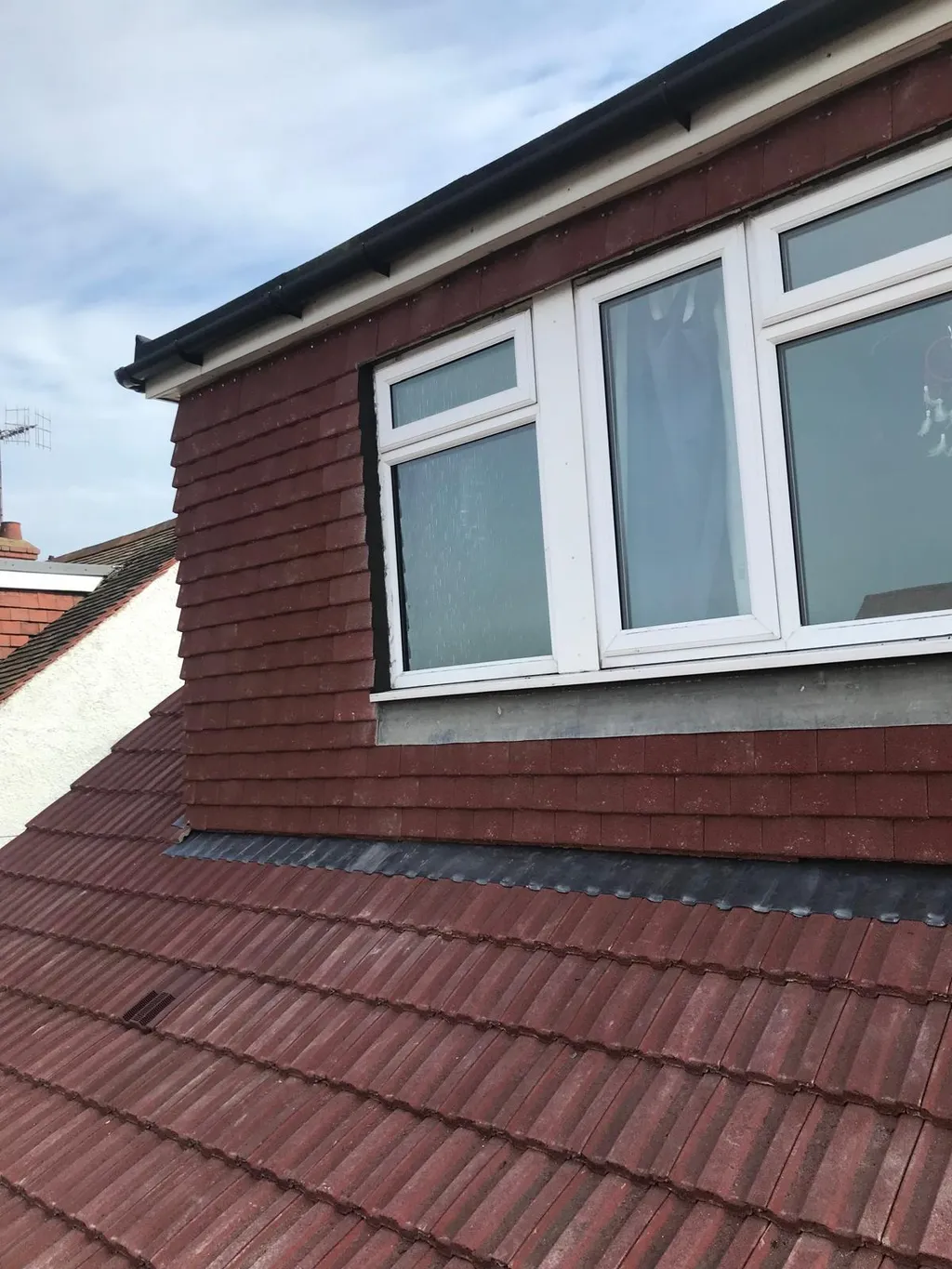
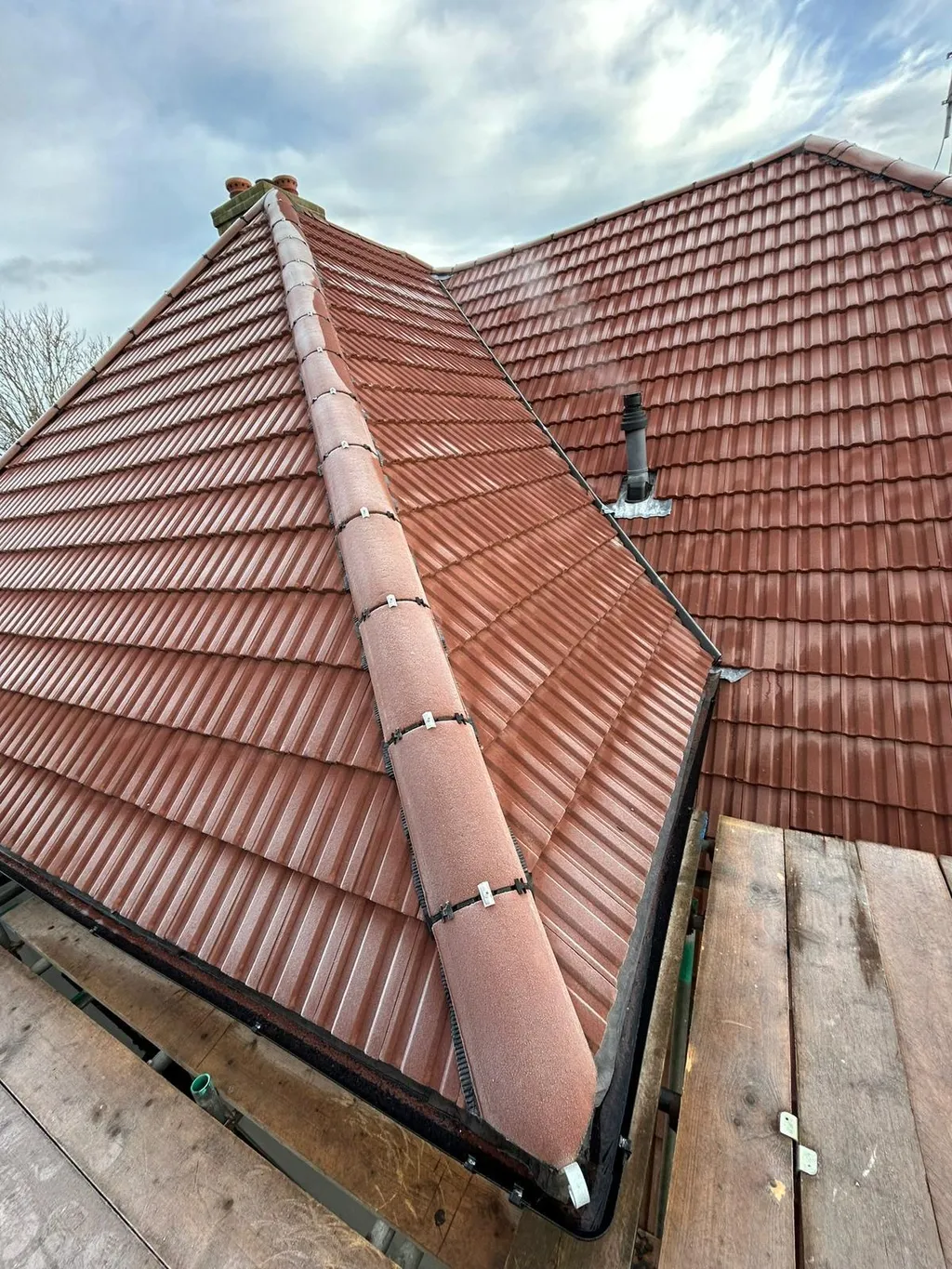
More finished work is in the gallery.
Google reviews
What do customers say?
EXCELLENT★★★★★

Marilyn Morgan
They responded to an issue of roof repair linked to a squirrel residing in our loft, promptly and efficiently.Read reviews on Google
Juliette Whittaker
I was told when he was arriving, leaving and returning at all times. He left the area spick and span as well.Read reviews on Google
Laura Catton
The process was seamless with great communication.Read reviews on Google
Victoria Jackson
Luke was really responsive and reliable. He made sure he understood exactly what the problem was before he suggested a solution and then managed both the scaffolding and the roof repairs really effectively. He was clear about what was needed and the price it would be and was always patient and provided a good explanation and answer to all my questions giving me complete confidence in his work. He always turned up when he said he would, provided regular updates and progress photos and I could absolutely not fault any part of his service.Read reviews on Google
Patricia Parsons
Luke and his team did an excellent job, very happy with the work carried out, clean and tidy finish, nice polite guys, and would certainly recommend.Read reviews on Google
Ben Whitby
As a local Architect I have been working with Luke of Royal Roofing Services now for several years and I would highly recommend their company. I have found them to be very professional, courteous, tidy and most importantly they do an excellent job. Ben Whitby - BJW Architectural & Planning ServicesRead reviews on Google
Mark Barrett
Luke and team came out to me for a chimney removal and provided an excellent service. Highly recommend, they are now also doing my roof!Read reviews on Google
Amelia Newnham
Royal Roofing were recommended to me through a friend for a chimney removal, and they got the job done excellently, swiftly and promptly. Couldn’t recommend the team more.Read reviews on Google
Amol Parmar
I recently had the pleasure of working with Royal Roofing Services for a roofing project, and I couldn't be happier with the results. From start to finish, the experience was outstanding. First and foremost, their professionalism stood out. They were punctual, arriving exactly when they said they would, and were well-prepared for the job. The team was courteous and respectful, Luke was sure to answer all my questions and explain each step of the process in detail. The quality of their work is exceptional. I highly recommend Luke and Royal Roofing Services for any roofing needs.Read reviews on Google
Helen Attwood
The team at Royal Roofing were efficient and courteous. Original survey was very thorough and explanation of what was going to happen and then what would happen at each phase. Final result was exactly what we expected. Highly recommended.Read reviews on Google
Luke Romaniuk
Great service, would definitely recommend.Read reviews on Google
Neil Fuller
Very impressed with Luke and his team. Great workmanship, great friendly service. I will not hesitate to recommend Royal Roofing services. Thanks GuysRead reviews on Google
How long does a tiled roof last?
It depends on the tile, the pitch and how exposed the house is. Clay and concrete tiles both last for decades. What usually ends a roof's life is not the tile but what is underneath it: the underlay, the battens and the fixings.
Can you match my existing roof tiles?
In most cases, yes. For a repair we look for a tile of the same size, profile and colour, and on older roofs a weathered or reclaimed tile often blends in better than a new one. A new patch will still look newer for a while until it weathers.
What is dry ridge?
A ridge fixed with a mechanical system instead of mortar. Each ridge tile is clamped down over a ventilated roll, so there is no mortar to crack and the roof space can breathe at its highest point.
Do ridge tiles have to be mechanically fixed?
On new work, the British Standard for slating and tiling expects ridge and hip tiles to have a mechanical fixing, not mortar alone. On a repair to an older roof, re-bedding in mortar is still common. We will explain which applies to your job.
Is there a guarantee on a new tiled roof?
Yes. A complete new roof carries a 25-year guarantee. Small repairs are not covered by that guarantee.
How long does a tiled re-roof take?
It depends on the size and shape of the roof and on the weather. We give you an idea of the programme with the quote, once we have seen the house.
Can you tile in winter?
Yes. Tiling carries on through the winter. Mortar work is held back in frost, and we do not strip a roof when heavy rain is forecast.
Do I need to move out while the roof is replaced?
No. The work is outside and the roof is kept weathertight overnight. It is noisy during the strip, and the loft is worth emptying or covering because dust falls through.
Will moss damage my tiled roof?
A light covering does little harm. Heavy moss holds water on the tiles, adds weight and breaks off into gutters and valleys, where it causes blockages. If you are worried, we can look at the condition of the tiles underneath.
Do you tile dormers, porches and extensions?
Yes. We tile dormers, bay roofs, porches and extensions as well as main roofs, and we fit Velux roof windows while the tiles are off.
Tiled roofing across Sussex
Tiled roofs differ from town to town. Worthing and the coast have a lot of interwar concrete and clay tiled semis and bungalows that take the wind and salt, which we cover on our Worthing and Brighton & Hove pages. Older clay plain tiles are common in Chichester and Lewes, where matching the original matters. Post-war estates around Horsham and Crawley are mostly concrete interlocking tiles now reaching the end of their life, and Eastbourne has large Victorian roofs with long hips and valleys.
Where a tiled roof meets a chimney, the fault is often in the brickwork or the lead, so see chimney repairs and rebuilds too.
Free quotes across Sussex
Get a free quote for a tiled roof
Call us on 07957 072703 or use the quote form at the top of the page.